
- Archaeology
- Human Evolution
A reduction in rainfall may have played a sizable role in the extinction of Homo floresiensis, the archaic human species nicknamed the "hobbit," a new study finds.
0 Comments Join the conversationWhen you purchase through links on our site, we may earn an affiliate commission. Here’s how it works.
 A skull of Homo floresiensis, also known as the "hobbit."
(Image credit: Lanmas via Alamy)
A skull of Homo floresiensis, also known as the "hobbit."
(Image credit: Lanmas via Alamy)
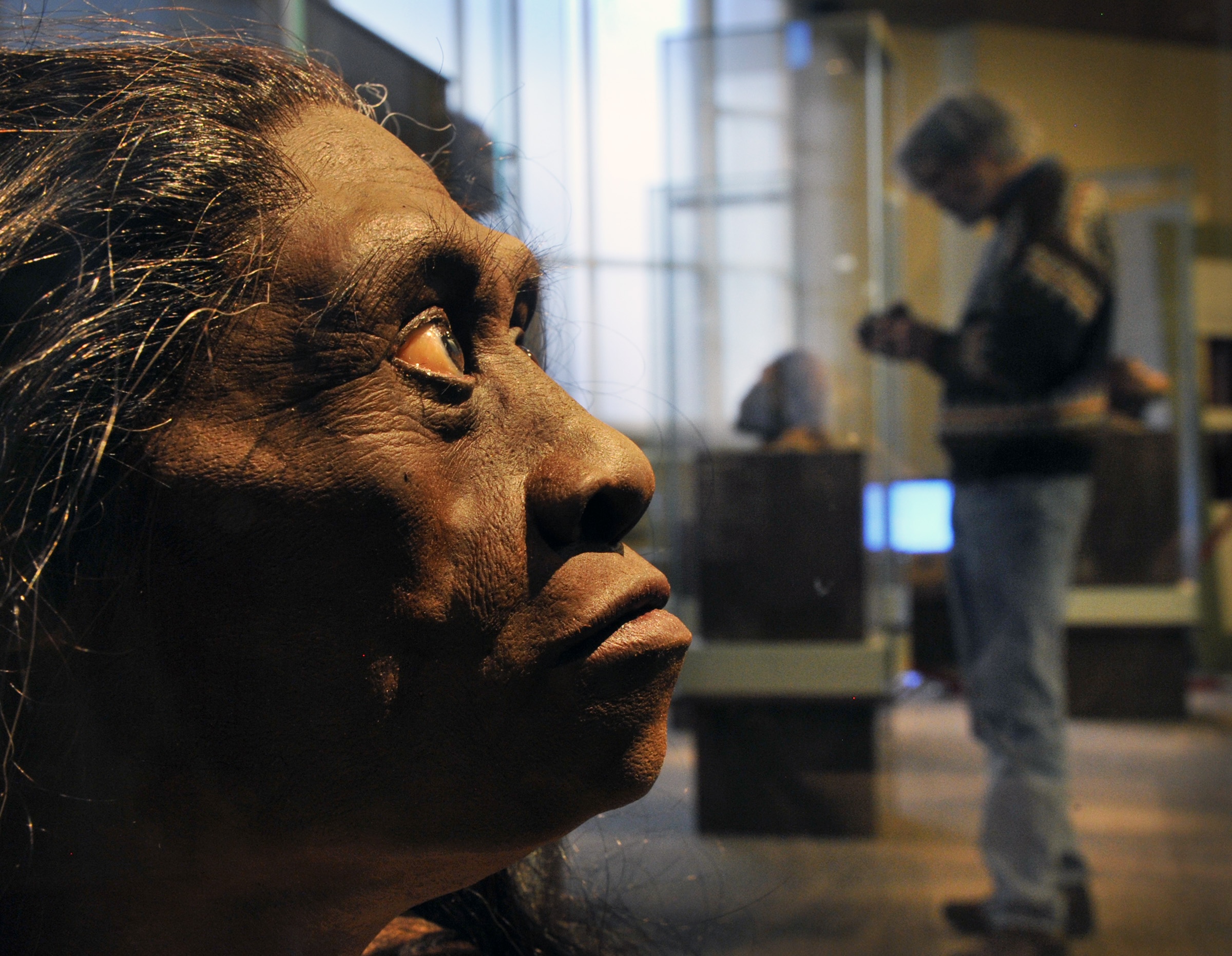
Homo floresiensis — a small ancient human species nicknamed the "hobbit" — may have gone extinct around 50,000 years ago because declining rainfall levels reduced the prey available for hunting. This may have forced them to migrate to areas where they competed with modern humans, new research suggests.
The rainfall shortage would not have been the only reason why they went extinct, the team noted. A volcanic eruption that occurred around 50,000 years ago may also have been a significant factor in their extinction.
You may like-
 Decades-long droughts doomed one of the world's oldest civilizations
-
 Differences in red blood cells may have 'hastened the extinction' of our Neanderthal cousins, new study suggests
-
 Modern humans arrived in Australia 60,000 years ago and may have interbred with archaic humans such as 'hobbits'
Now, in a paper published Monday (Dec. 8) in the journal Communications Earth & Environment, scientists report that rainfall on the island appears to have declined considerably before 50,000 years ago. They also found that the population of Stegodon, a genus of a now-extinct elephant relative that the hobbits hunted, also diminished before vanishing from Flores around 50,000 years ago.
To determine how rainfall on the island changed, the team studied a stalagmite from Liang Luar, a cave on Flores that is close to Liang Bua. Stalagmites grow when water evaporates and forms calcium carbonate. The new growth also has small amounts of other minerals, such as magnesium. Stalagmites don't grow as fast during times of water shortage, and the growth that does occur tends to have less calcium carbonate and more magnesium, the researchers noted in their paper. This means that by measuring the ratio of magnesium to calcium carbonate, the team can determine when rainfall decreased or increased, and by how much.
The researchers found that average annual rainfall declined from 61.4 inches (1,560 millimeters) 76,000 years ago to 40 inches (990 mm) 61,000 years ago. The island continued to have this reduced rainfall level through 50,000 years ago. At that point, there was an eruption at a nearby volcano, and a layer of ejected rock covered the island.
When the team analyzed the remains of Stegodon teeth, they found that the number of these animals decreased on the island between 61,000 and 50,000 years ago, before vanishing after the eruption. The researchers think the reduction in rainfall led to a decrease in Stegodon populations, making life more difficult for the hobbits as they formed a major part of their diet.
Sign up for the Live Science daily newsletter nowContact me with news and offers from other Future brandsReceive email from us on behalf of our trusted partners or sponsorsBy submitting your information you agree to the Terms & Conditions and Privacy Policy and are aged 16 or over.As rainfall declined, Stegodon populations may have migrated to the coasts of the island, with the hobbits following them.
"We suspect that if the Stegodon population were declining due to reduced river flow then they would have migrated away to a more consistent water source," Nick Scroxton, a research scientist of hydrology, paleoclimate and paleoenvironments at University College Dublin and co-author of the paper, told Live Science in an email. "So it makes sense for the hobbits to have followed."
It's possible that moving to the coast could have brought the hobbits into contact with Homo sapiens groups who were expanding throughout the region. This contact could have resulted in competition for resources and even intergroup conflict, Scroxton suggested. Additionally, the volcanic eruption around 50,000 years ago would have made things even worse for the hobbits.
"This looks like a very impressive study," said Julien Luoys, a palaeontologist at Griffith University in Australia who has conducted extensive research on hominins but was not involved in the new research, told Live Science in an email. A reduction in rainfall can have a major impact on an island as small as Flores, he noted.
Related Stories—Ancient Hobbits slowed down growth during childhood, showing that humans didn't always grow 'bigger and bigger brains'
—Archaic human 'hobbits' were even shorter than we thought, 700,000-year-old teeth and bone reveal
—1.4 million-year-old jaw that was 'a bit weird for Homo' turns out to be from never-before-seen human relative
"There's only a limited amount of space on an island, and only so many types of environments that can be harboured," Luoys said. "When things get drier, an animal can't simply move off the island, and any potential refugia they could use are going to either disappear or become very crowded, very quickly."
Debbie Argue, an honorary lecturer in the School of Archaeology and Anthropology at the Australian National University, who was not involved in the work, also praised the research. "The paper gives us an excellent insight into a changing climatic environment in the region and is a most welcome contribution to knowledge about past conditions on Flores," Argue told Live Science in an email.
 Owen JarusSocial Links NavigationLive Science Contributor
Owen Jarus is a regular contributor to Live Science who writes about archaeology and humans' past. He has also written for The Independent (UK), The Canadian Press (CP) and The Associated Press (AP), among others. Owen has a bachelor of arts degree from the University of Toronto and a journalism degree from Ryerson University.
You must confirm your public display name before commenting
Please logout and then login again, you will then be prompted to enter your display name.
Logout Read more Decades-long droughts doomed one of the world's oldest civilizations
 Differences in red blood cells may have 'hastened the extinction' of our Neanderthal cousins, new study suggests
 Modern humans arrived in Australia 60,000 years ago and may have interbred with archaic humans such as 'hobbits'
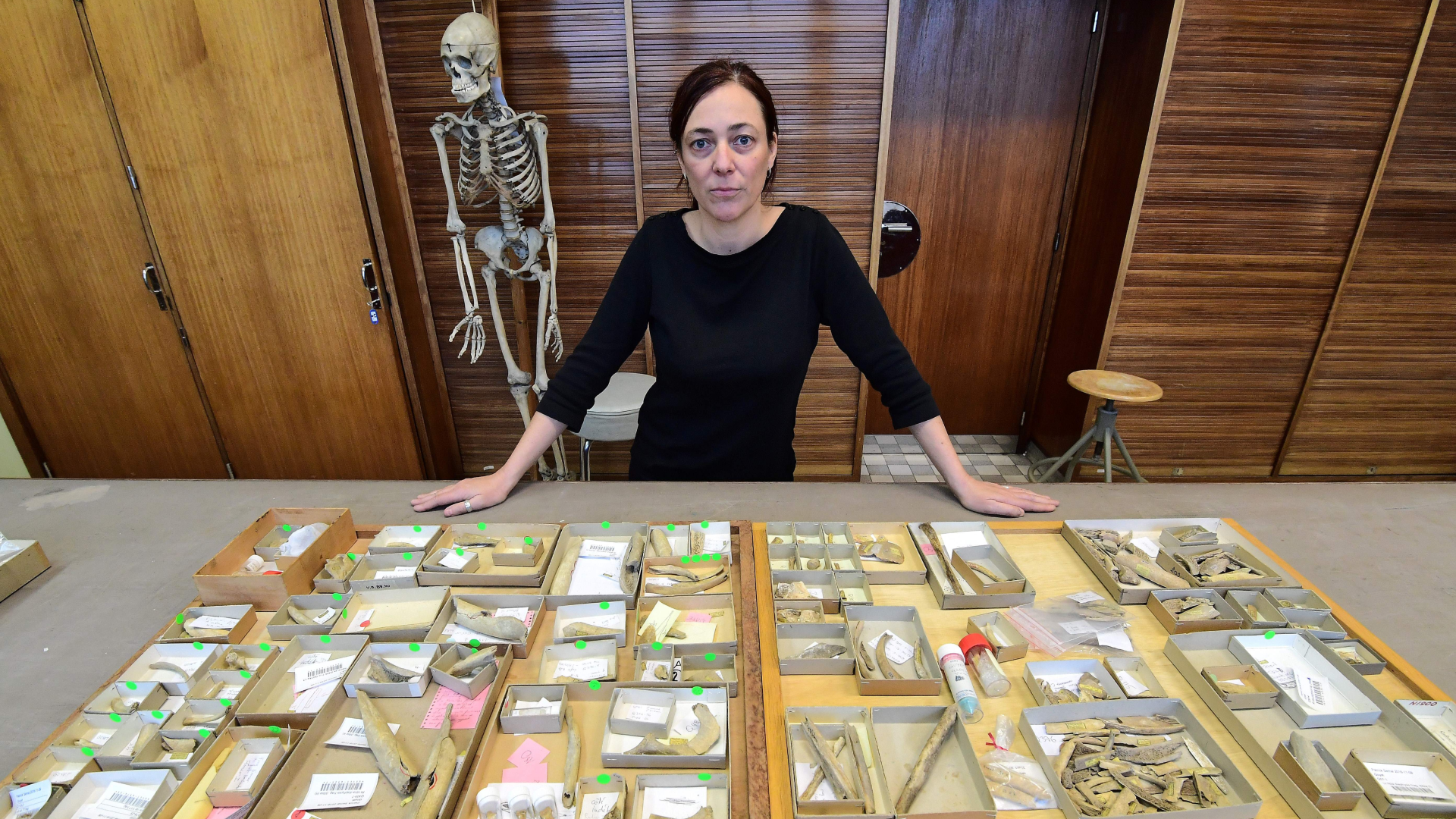 Neanderthals cannibalized 'outsider' women and children 45,000 years ago at cave in Belgium
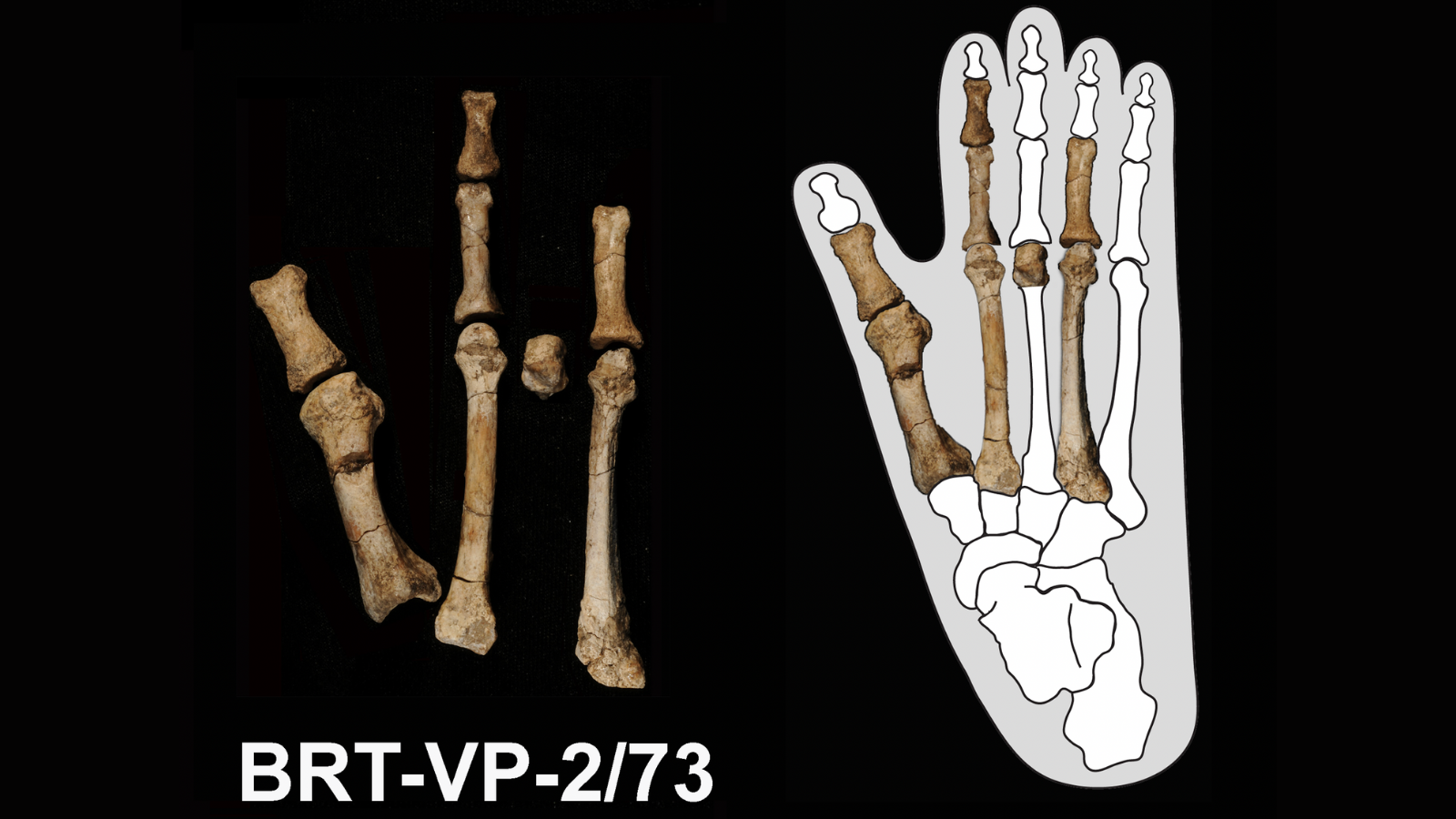 A fossilized foot found 15 years ago belonged to enigmatic human relative that lived alongside Lucy, scientists say
 Leopards ate our ancient human ancestors' faces, AI analysis reveals
Latest in Human Evolution
Leopards ate our ancient human ancestors' faces, AI analysis reveals
Latest in Human Evolution
 'An extreme end of human genetic variation': Ancient humans were isolated in southern Africa for nearly 100,000 years, and their genetics are stunningly different
Modern humans arrived in Australia 60,000 years ago and may have interbred with archaic humans such as 'hobbits'
A fossilized foot found 15 years ago belonged to enigmatic human relative that lived alongside Lucy, scientists say
Neanderthals cannibalized 'outsider' women and children 45,000 years ago at cave in Belgium
'An extreme end of human genetic variation': Ancient humans were isolated in southern Africa for nearly 100,000 years, and their genetics are stunningly different
Modern humans arrived in Australia 60,000 years ago and may have interbred with archaic humans such as 'hobbits'
A fossilized foot found 15 years ago belonged to enigmatic human relative that lived alongside Lucy, scientists say
Neanderthals cannibalized 'outsider' women and children 45,000 years ago at cave in Belgium
 Science history: Iconic 'Lucy' fossil discovered, transforming our understanding of human evolution — Nov. 24, 1974
 Did Neanderthals have religious beliefs?
Latest in News
The 'hobbits' may have died out when drought forced them to compete with modern humans, new research suggests
Did Neanderthals have religious beliefs?
Latest in News
The 'hobbits' may have died out when drought forced them to compete with modern humans, new research suggests
 New 3I/ATLAS images show the comet getting active ahead of close encounter with Earth
 Ethereal structure in the sky rivals 'Pillars of Creation' — Space photo of the week
 Unusual, 1,400-year-old cube-shaped human skull unearthed in Mexico
 Strangely bleached rocks on Mars hint that the Red Planet was once a tropical oasis
 Lost Indigenous settlements described by Jamestown colonist John Smith finally found
LATEST ARTICLES
Lost Indigenous settlements described by Jamestown colonist John Smith finally found
LATEST ARTICLES- 1Lost Indigenous settlements described by Jamestown colonist John Smith finally found
- 2Strangely bleached rocks on Mars hint that the Red Planet was once a tropical oasis
- 32,400-year-old 'sacrificial complex' uncovered in Russia is the richest site of its kind ever discovered
- 4Ethereal structure in the sky rivals 'Pillars of Creation' — Space photo of the week
- 5What was the loudest sound ever recorded?