- Planet Earth
- Rivers & Oceans
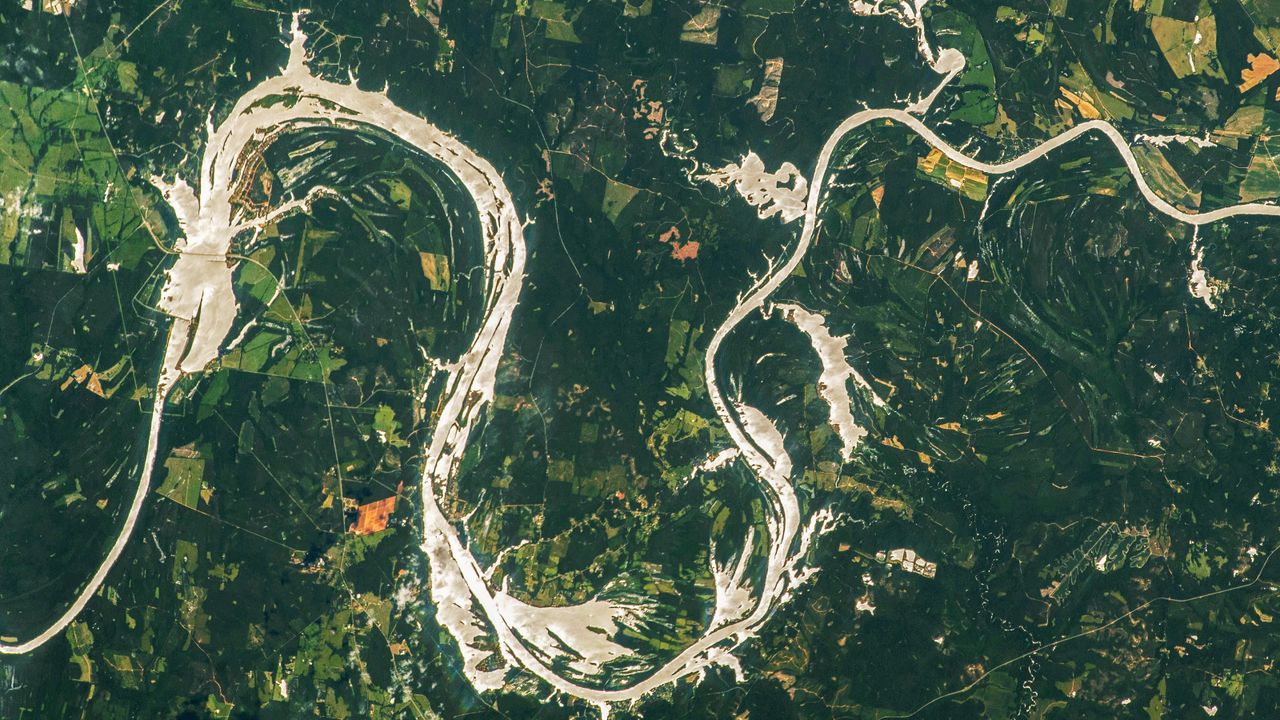
A 2023 astronaut photo shows the moment the Alabama River briefly morphed into an undulating golden serpent, similar in shape to a Chinese dragon. This temporary transformation was the result of a rare mirror-like phenomenon known as a "sunglint."
0 Comments Join the conversationWhen you purchase through links on our site, we may earn an affiliate commission. Here’s how it works.
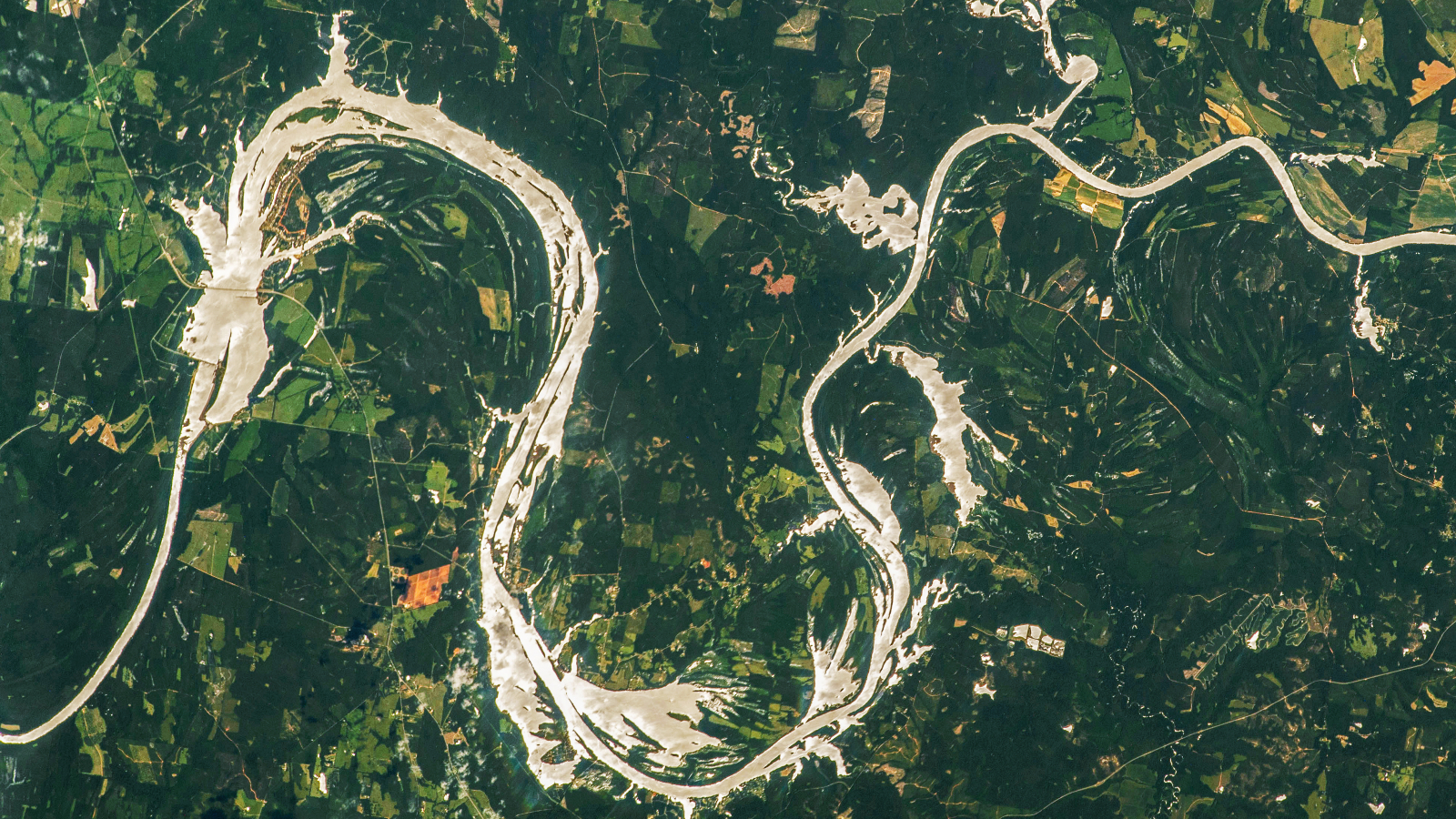 A rare "sunglint" briefly transformed a section of the Alabama River in 2023, making it look like a giant golden dragon when viewed from above.
(Image credit: NASA/ISS program)
QUICK FACTS
A rare "sunglint" briefly transformed a section of the Alabama River in 2023, making it look like a giant golden dragon when viewed from above.
(Image credit: NASA/ISS program)
QUICK FACTSWhere is it? Boykin, Alabama [32.10219570, -87.28911406]
What's in the photo? A "sunglint" making the Alabama River look like a golden Chinese dragon
Who took the photo? An unnamed astronaut on board the International Space Station (ISS)
When was it taken? June 26, 2023
This incredible astronaut photo captured a unique glimpse of Alabama's eponymous river cosplaying as a golden Chinese dragon. The metallic hue of the serpentine waterway is the result of a rare optical phenomenon that is only visible from space.
The section of the river in the photo features a large U-shaped bend, known as Gee's Bend, that surrounds the small town of Boykin, which is renowned for its "vibrant folk art" that is displayed across the country, according to NASA's Earth Observatory.
You may like-
 Shapeshifting 'braided river' in Tibet is the highest in the world, and is becoming increasingly unstable
-
 Bizarre, UFO-like halo of red light appears over small Italian town — for the second time in 3 years
-
 Pair of 'holy' islands in eerily green African lake hold centuries-old relics and mummified emperors
The river's unusual glow is the result of a rare phenomenon, known as a sunglint, which occurs when sunlight perfectly reflects off a still body of water toward an observer in space, like a massive liquid mirror. This is similar to how the surface of an ocean or lake sparkles when light bounces off it during a sunset — except the only people who can see it are astronauts.
The golden color of the sunglint helps provide greater contrast between water and land, highlighting a series of flooded zones. When combined with the river's larger bends, this makes the waterway look surprisingly like a dragon from Chinese mythology, netizens pointed out at the time.
The head of the dragon (located on the left of the image) is represented by the flooded zones of the artificial William "Bill" Dannelly Reservoir, which was created in the 1960s by partially damming the river. This 27-square-mile (70 square kilometers) reservoir generates hydroelectric power via a dam and has also become a popular fishing spot for people looking to catch crappie, bass and catfish.
The river's water levels rose higher than initially expected following the dam's construction, causing the waterway to permanently spill over into surrounding floodplains, such as at Chilatchee Creek (towards the bend in the dragon's tail) and around Gee's Bend, according to Earth Observatory.
Sign up for the Live Science daily newsletter nowContact me with news and offers from other Future brandsReceive email from us on behalf of our trusted partners or sponsorsBy submitting your information you agree to the Terms & Conditions and Privacy Policy and are aged 16 or over.Most bodies of water usually take on a silvery, mirror-like appearance when illuminated by sunglints, making the Alabama River's golden glow particularly noteworthy.
MORE EARTH FROM SPACE—Rare 'sunglint' transforms the Mediterranean Sea into a swirling, silver mirror
—Lake-filled impact crater in Africa transforms into a giant silver 'mirror' via rare phenomenon
—'Lake of clouds' appears between volcanic nesting dolls in Russia via rare mirror-like phenomenon
The unusual golden color is likely the result of atmospheric scattering of the reflected light by aerosols, dust and haze. This scatters blue wavelengths of light, giving the remaining light a more yellow hue.
Astronauts are always on the lookout for sunglints, especially over the ocean, because they can reveal hidden natural phenomena, such as gyres and internal waves, as well as human activities, such as ship wakes and oil slicks, according to the National Environmental Satellite, Data, and Information Service.
For more incredible satellite photos and astronaut images, check out our Earth from space archives.
TOPICS Earth from space Harry BakerSocial Links NavigationSenior Staff Writer
Harry is a U.K.-based senior staff writer at Live Science. He studied marine biology at the University of Exeter before training to become a journalist. He covers a wide range of topics including space exploration, planetary science, space weather, climate change, animal behavior and paleontology. His recent work on the solar maximum won "best space submission" at the 2024 Aerospace Media Awards and was shortlisted in the "top scoop" category at the NCTJ Awards for Excellence in 2023. He also writes Live Science's weekly Earth from space series.
You must confirm your public display name before commenting
Please logout and then login again, you will then be prompted to enter your display name.
Logout Read more Shapeshifting 'braided river' in Tibet is the highest in the world, and is becoming increasingly unstable
 Bizarre, UFO-like halo of red light appears over small Italian town — for the second time in 3 years
 Pair of 'holy' islands in eerily green African lake hold centuries-old relics and mummified emperors
 'Miracle' photo captures Comet Lemmon and meteor seemingly entwined over Earth
 Sea of Saharan 'star dunes' clashes with otherworldly terrain where 2 countries meet
 Trio of 'black mesas' leftover from Paleozoic era spawn rare sand dunes in the Sahara
Latest in Rivers & Oceans
Trio of 'black mesas' leftover from Paleozoic era spawn rare sand dunes in the Sahara
Latest in Rivers & Oceans
 Collapse of key Atlantic current could bring extreme drought to Europe for hundreds of years, study finds
 Antarctica's Southern Ocean might be gearing up for a thermal 'burp' that could last a century
Shapeshifting 'braided river' in Tibet is the highest in the world, and is becoming increasingly unstable
Antarctica's Southern Ocean might be gearing up for a thermal 'burp' that could last a century
Shapeshifting 'braided river' in Tibet is the highest in the world, and is becoming increasingly unstable
 An 'ice tsunami' in 2024 ripped through the Yukon with such force it tore up trees and the riverbed
 Coral Triangle: The giant hidden 'Amazon' beneath the sea that appears somewhat resilient to climate change
 The Red Sea experienced 'one of the most extreme environmental events on Earth' 6 million years ago
Latest in Features
The Red Sea experienced 'one of the most extreme environmental events on Earth' 6 million years ago
Latest in Features
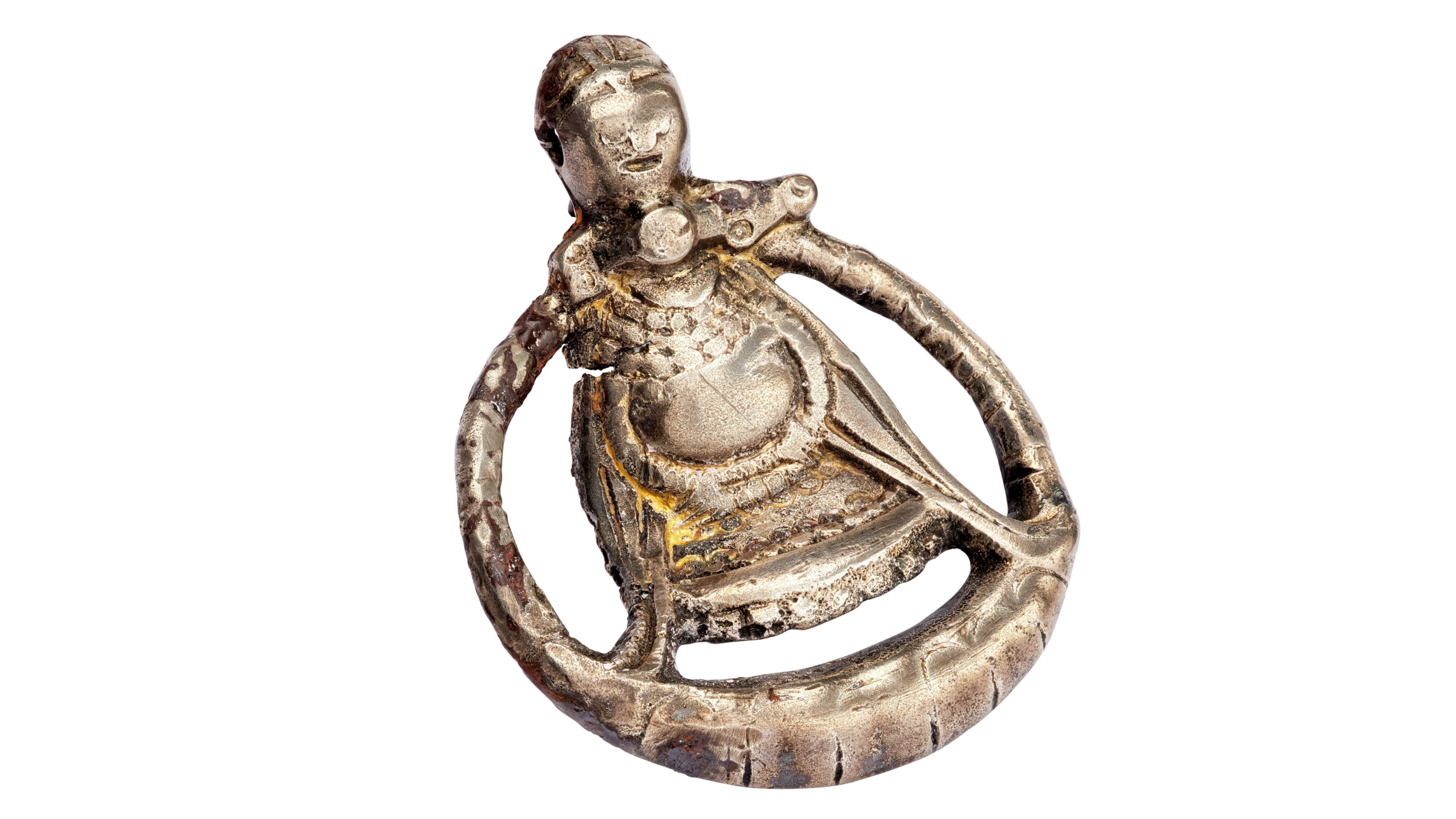 Ash Pendant: The only known depiction of a pregnant Viking woman
 Science history: Female chemist initially barred from research helps develop drug for remarkable-but-short-lived recovery in children with leukemia — Dec. 6, 1954
Rare 'sunglint' transforms Alabama River into a giant 'golden dragon'
Science history: Female chemist initially barred from research helps develop drug for remarkable-but-short-lived recovery in children with leukemia — Dec. 6, 1954
Rare 'sunglint' transforms Alabama River into a giant 'golden dragon'
 What if Antony and Cleopatra had defeated Octavian?
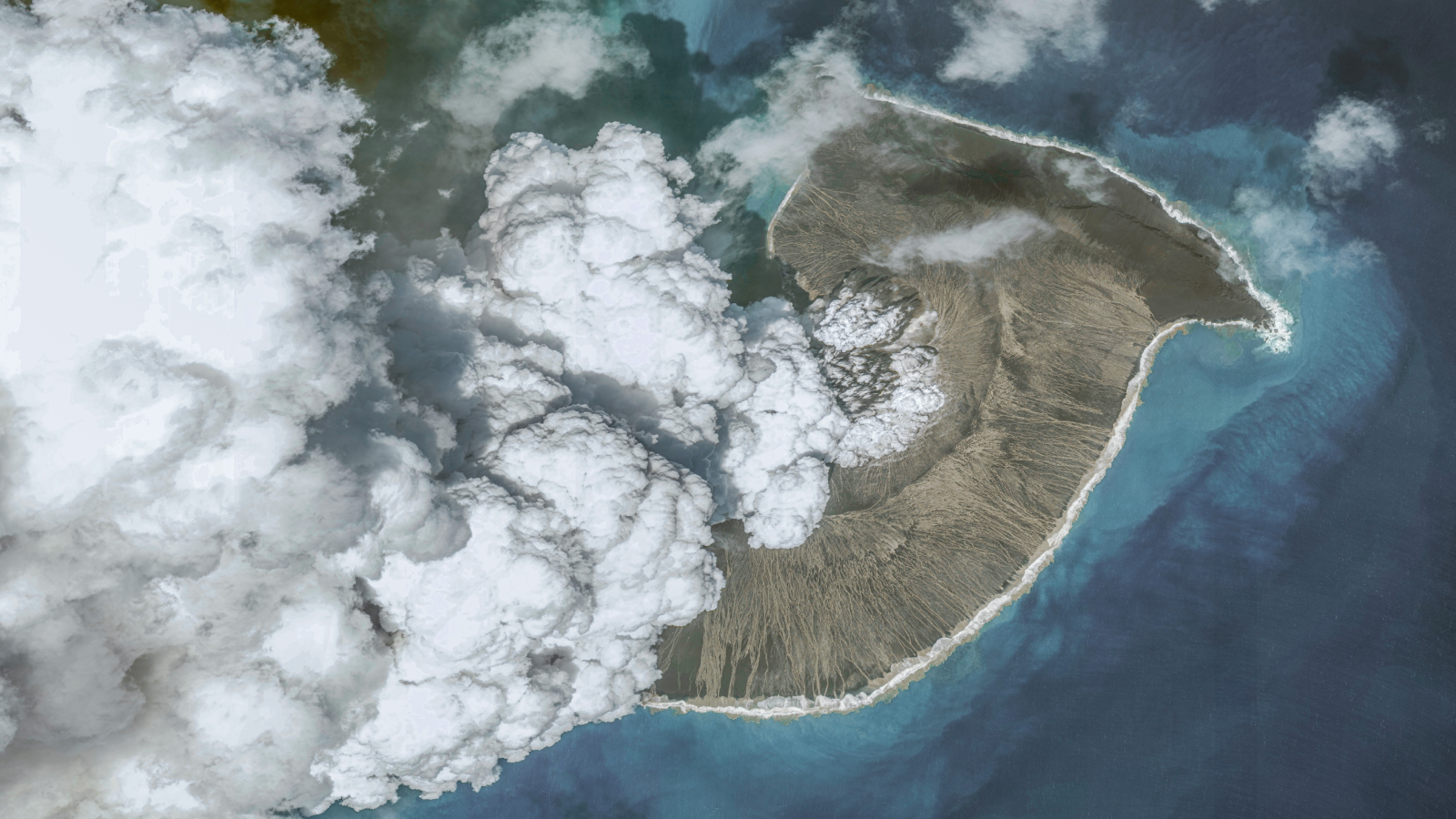 What was the loudest sound ever recorded?
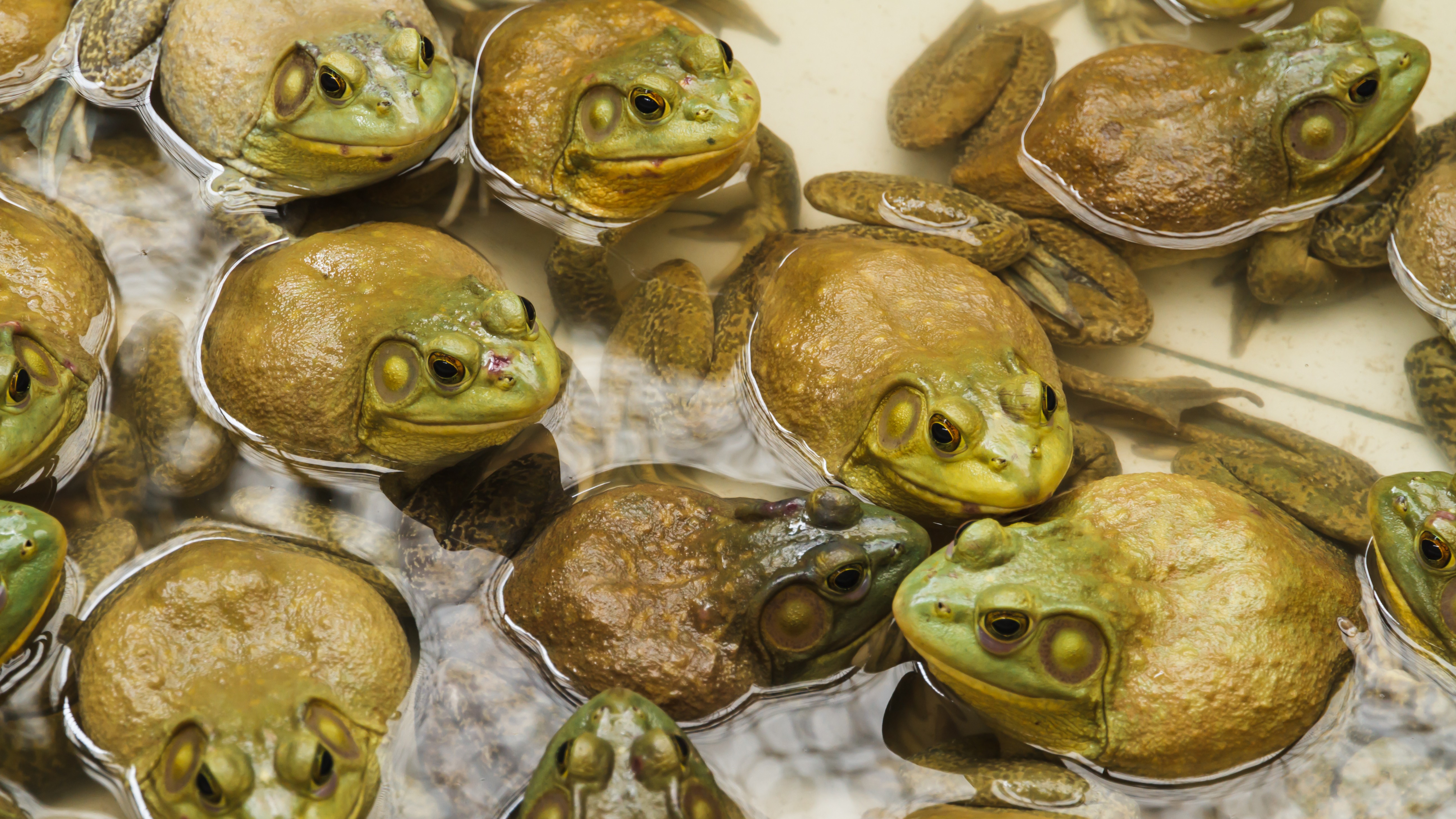 A woman got a rare parasitic lung infection after eating raw frogs
LATEST ARTICLES
A woman got a rare parasitic lung infection after eating raw frogs
LATEST ARTICLES 1Glue strong enough to tow a car made from used cooking oil
- 2Historic search for 'huge missing piece' of the universe turns up negative — but reveals new secrets of particle physics
- 3Today's biggest science news: Japan earthquake tsunami | Kilauea lava fountains | Northern Lights forecast
- 4Ash Pendant: The only known depiction of a pregnant Viking woman
- 5The 'hobbits' may have died out when drought forced them to compete with modern humans, new research suggests