 New Africa/Shutterstock
We may receive a commission on purchases made from links.
Modern smartphones all essentially look the same. You have a glass sandwich build with giant lenses on the back and a bezelless display up front. Flagships from Samsung and Apple have enough processing power to run AI chatbots locally — so we're past questioning how far smartphones have come. We've even seen concepts of modular phones that teased a future where you could swap out components on the fly.
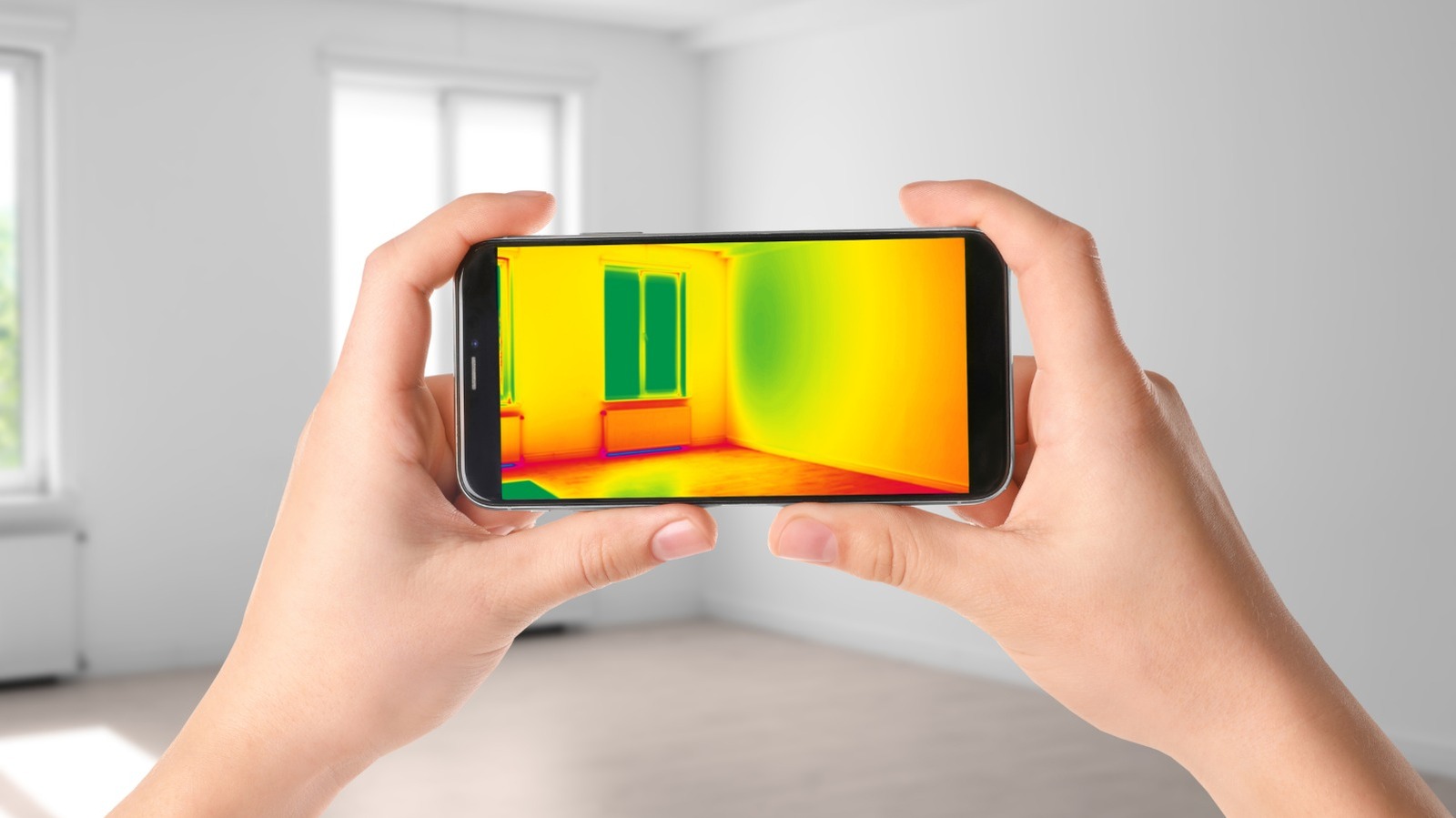
Attempts to make smartphones modular didn't succeed, and the closest we have gotten to this concept has been via mountable camera lenses and accessories that plug into our phones. One such add-on that has found a niche audience is that of thermal cameras. These are different from night vision cameras in that they visualize heat signatures that the human eye can't normally see.
There is a decent market of thermal camera attachments for smartphones, like the InfiRay P2 Pro and the Flir One Edge Pro, which Digital Camera World has recommended. The former pick is the one you might be interested in if you're looking for an absolutely tiny thermal camera for your Android phone.
A thermal camera can be a great accessory for your smartphone if you're constantly troubleshooting things and dealing with electronics or hardware that are prone to overheating. A plug-and-play attachment makes this process even easier. The Flir One (non-Pro) is also a popular pick on Amazon, with over 6,500 reviews and a 4.1-star rating.
How your smartphone can be used as a thermal camera
 Flir
Flir
Out of the box, your smartphone is fitted with optical cameras that work by capturing reflected light in the visible spectrum. A thermal camera, on the other hand, captures heat energy — which is why the output resembles a gradient of reds, yellows, and blues. These colors represent the temperature differences across the object in frame. This requires specialized hardware that's different from a traditional camera sensor.
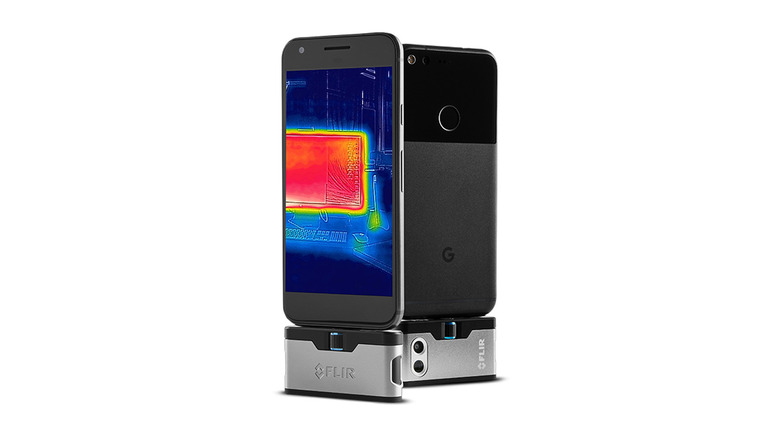
There are several apps on the Play Store that claim to give your smartphone thermal imaging capabilities — but without a thermal sensor, these apps are nothing more than a party trick. Gadgets like the Flir One contain all the necessary hardware to capture infrared energy, and through a little software wizardry, can translate these heat signatures into an output that makes sense.
The Flir One comes in variations to accommodate both Android and iOS devices. It features an 80 x 60 thermal sensor that Flir digitally enhances to a resolution of 240 x 180. Compared to modern smartphones, thermal cameras have much lower resolutions. Therefore, Flir uses its MSX technology to combine both the thermal imaging output and the visible light details to produce a live feed that is better defined and easier to comprehend. You will need the Flir app, which is available for free, to capture thermal images using your phone. The Flir One is priced at $214 and has a temperature range of -20 to 120 degrees Celsius.